Thursday, July 23, 2015

Buying Textbooks: From A Students Point Of View

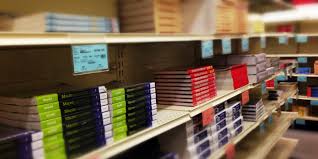
The financial aspects of college are complex for students and the cost of textbooks can be more than they can afford. On average a student will spend $370 per semester according to the Institute of Education Sciences (IES). Most students buy textbooks for their first semester of class expecting that they will utilize everything that is required for the course. The number of students who continue to purchase all of their required texts drops significantly in subsequential semesters. Part of this reason is because the books were underutilized in the course. Collegeboard conducted a survey in 2014 that asked students about their textbook usage requirements. "94% that were a part of the survey found that they bought books that were used less than 50% of" (Collegeboard, 2014).
According to the U.S. Public Interest Research group (2014), "65% of students chose not to buy a textbook due to its cost".  

Dollarphotoclub_78887285
It is concerning that students do not buy their textbooks – which are an "essential aid in learning new material, completing assignments, and studying for exams" – because they can not afford them. (Senack, 2014)
Faculty are taking notice and are turning to customized books to lower costs and ensure that students are prepared for class. 

One option for creating affordable custom texts is XanEdu, where over 630,000 students per year have access to custom digital and print course materials. We have found that students like custom textbooks because the material that is included is completely relevant to their course and are more likely to buy the texts.

References:
Collegeboard (2014). Trends in College Education. Collegeboard, Web. 27 Mar. 2015.
   .
Senack, E. (2014) Fixing The Broken Textbook Market. Public Interest Research, Web 27
    2015. http://senate.rutgers.edu/PIRGTextbookCostsReport.pdf

Wednesday, July 22, 2015

Social Media: Savings For College Students

Your college years are some of the best of your life as you make new friends, learn, and enter the adult world. The first two are usually great. It’s the “entering the adult world” part that can be challenging. We have put together a few tips to help you save some money.

 Make the most of technology
As a student, you will be reading and researching a lot. A survey conducted by Educaus, found that 90.5 percent of students use technology for “classroom activity and studying” 3-5 hours per week (New, 2014).
Make use of your institutional library resources as well as your state library resources and databases for watching movies, listening to music, e-books, and finding support materials for your papers. Many libraries carry a full collection of DVD's, CDs, and e-books.
If your textbook has an e-resource component, use it for note taking and highlighting as you can save time and money on notebooks and notecards.
If your professor utilizes XanEdu for their book or course pack you can read and takes notes with course materials via MyXanEdu on your desktops, laptops, ios devices, and Android device.
 right
“90.5 % of students use technology for classroom activity and studying 3-5 hours per week.” #XanEdu [Tweet this]

Your student ID can get you discounts. 
Did you know that Bestbuy and Apple provide student discounts? There are many companies locally and nationally that provide substantial discounts to Students. S,o before you buy a new laptop or phone look up these discounts.
Buying online: buyer beware
Be aware that online prices of textbooks may not be cheaper than your bookstore when shipping and handling costs are added.  Also, make sure you know that the ISBN of the book you are buying matches your syllabus. Books that are priced drastically lower than your bookstore could be international or instructor editions of the textbooks with a different ISBNs. While International copies appear less expensive, often they do not include the same content that the US version has.  

Tuesday, July 21, 2015

Overcoming The Cost Of Overpriced Textbooks: A Custom Approach

The continued rise in textbook costs is not a new topic, but one that is gaining the attention of professors around the globe. Professors who once chose texts by currency and relevance are now faced with reviewing materials that must be affordable, too. "The goal in every professor's mind is getting the best material and the best book to provide a quality education," said Samuel Dunietz, a research and policy analyst for the American Assn. of University Professors. "But I think they are becoming more mindful that it's a potential obstacle to getting a quality education if a student doesn't have the money and they just may not buy the books” (Rivera, 2014).
“Between 2002 and 2013, the price of college textbooks rose 82% — nearly three times the rate of inflation, according to a recent study by the Government Accountability Office” (Weisbaum, 2014). To offset the cost, students are looking for more affordable ways to obtain the texts, but this is not always possible. Some choose to not purchase the text altogether and are "knowingly accepting the risk of a lower grade to avoid paying for the textbook as reported by advocacy group U.S. PIRG " (Weisbaum, 2014).
Many faculty members are looking to custom texts and online resources as a way to supplement their typical required textbook, in order to remedy the issue.  “Consumer advocates believe the solution is to expand the market for "open textbooks." These books are written by faculty and peer-reviewed, just like traditional books” (Weisbaum, 2014).
bookstore

"Students are appreciative of being assigned a textbook that didn't break the bank,"#Xanedu http://tiny.cc/mc7stx  [Tweet this]
Creating custom materials is not a new idea as institutions across the country have been creating materials through XanEdu Publishing for over a decade. Scott Montgomery, Bookstore Manager at Harvard University states, “It is a pleasure to work with XanEdu. Their knowledge of the industry and understanding of the academic community is excellent. They are very responsive to our faculty, staff, and students.”
Irene Duranczyk, a University of Minnesota professor, states, “Students are very, very appreciative of being assigned a textbook that didn't break the bank" (Weisbaum, 2014). Professors are beginning to think the same way as accounting professor Steven Filling states, "When you look at student debt, it's something we need to do" (Rivera, 2014).
.


Thursday, July 9, 2015

OTaku

  I learned a new word today, Otaku. It is a Japanese term for people with obsessive interests. (wikipedia). I heard about it today in a Ted Talk  I watch hosted by Seth Godwin. It inspired me to think about the market and where within the sales bell curve our content focuses.

Image result for sales bell curve

Many marketers and social sellers of the world know that word of mouth sales is monumental to your success. To increase your chances, you should focus on Otaku. Those people who are early adopters and individuals who are more caught up with being the first to own something over what the ROI is or the personal cost.

When I consider my personal buying habits I quickly realize that I am an early adopter and that I am otaku about coffee, technology, and coffee. I really get bent out of shape when my social network adopts something before I own it. This is why I have a pantry of coffee, a closet of trendy coffee pots, and a few technology drawers in my desk. Understanding what drives my personal buying habits is really not a complex one and it is more about interest and research than it ever is about marketing. The way I see it, if there is a commercial about it then it is probably past the stage where I am Otaku about it.

So what it is that makes you wait in long lines and research at crazy hours of the night?