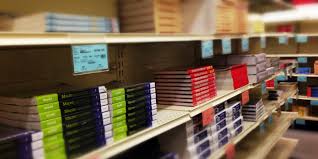
The continued rise in textbook costs is not a new topic, but one that is gaining the attention of professors around the globe. Professors who once chose texts by currency and relevance are now faced with reviewing materials that must be affordable, too. "The goal in every professor's mind is getting the best material and the best book to provide a quality education," said Samuel Dunietz, a research and policy analyst for the American Assn. of University Professors. "But I think they are becoming more mindful that it's a potential obstacle to getting a quality education if a student doesn't have the money and they just may not buy the books” (Rivera, 2014).
“Between 2002 and 2013, the price of college textbooks rose 82% — nearly three times the rate of inflation, according to a recent study by the Government Accountability Office” (Weisbaum, 2014). To offset the cost, students are looking for more affordable ways to obtain the texts, but this is not always possible. Some choose to not purchase the text altogether and are "knowingly accepting the risk of a lower grade to avoid paying for the textbook as reported by advocacy group U.S. PIRG " (Weisbaum, 2014).
Many faculty members are looking to custom texts and online resources as a way to supplement their typical required textbook, in order to remedy the issue. “Consumer advocates believe the solution is to expand the market for "open textbooks." These books are written by faculty and peer-reviewed, just like traditional books” (Weisbaum, 2014).
"Students are appreciative of being assigned a textbook that didn't break the bank,"#Xanedu http://tiny.cc/mc7stx [Tweet this]
Creating custom materials is not a new idea as institutions across the country have been creating materials through XanEdu Publishing for over a decade. Scott Montgomery, Bookstore Manager at Harvard University states, “It is a pleasure to work with XanEdu. Their knowledge of the industry and understanding of the academic community is excellent. They are very responsive to our faculty, staff, and students.”
Irene Duranczyk, a University of Minnesota professor, states, “Students are very, very appreciative of being assigned a textbook that didn't break the bank" (Weisbaum, 2014). Professors are beginning to think the same way as accounting professor Steven Filling states, "When you look at student debt, it's something we need to do" (Rivera, 2014).
.

No comments:
Post a Comment